The underground operations center that never stops
Everything on this page comes from the demonstration environment of AMARU U-NOC — a fictional mine and synthetic data. The behaviour is the product's; the numbers are not a client's.
Inputs
- Fixed & third-party sensorsgas, thermal, vibration, LiDAR — including the ones already installed
- Robotsmobile sensor and executor — ours or the client's
- Your plant systemsSCADA, historian, CMMS, ERP, CCTV, access control, fire & gas
Agentic AI NOC
- Normalizesheterogeneous sources reduced to one operational picture
- Predictstrends and signatures read before the deviation leaves the range
- Actsprotocols executed autonomously — safety-critical calls escalated to humans
- Provesevery action on an immutable, regulator-ready audit trail
Outcomes
- Productionfailures anticipated, maintenance before the stoppage, less downtime
- Compliancecritical alerts in under five minutes; reports ready for inspection
- Peopleout of hazardous exposure, in command of the decisions that matter
From reactive to predictive — a different operating model
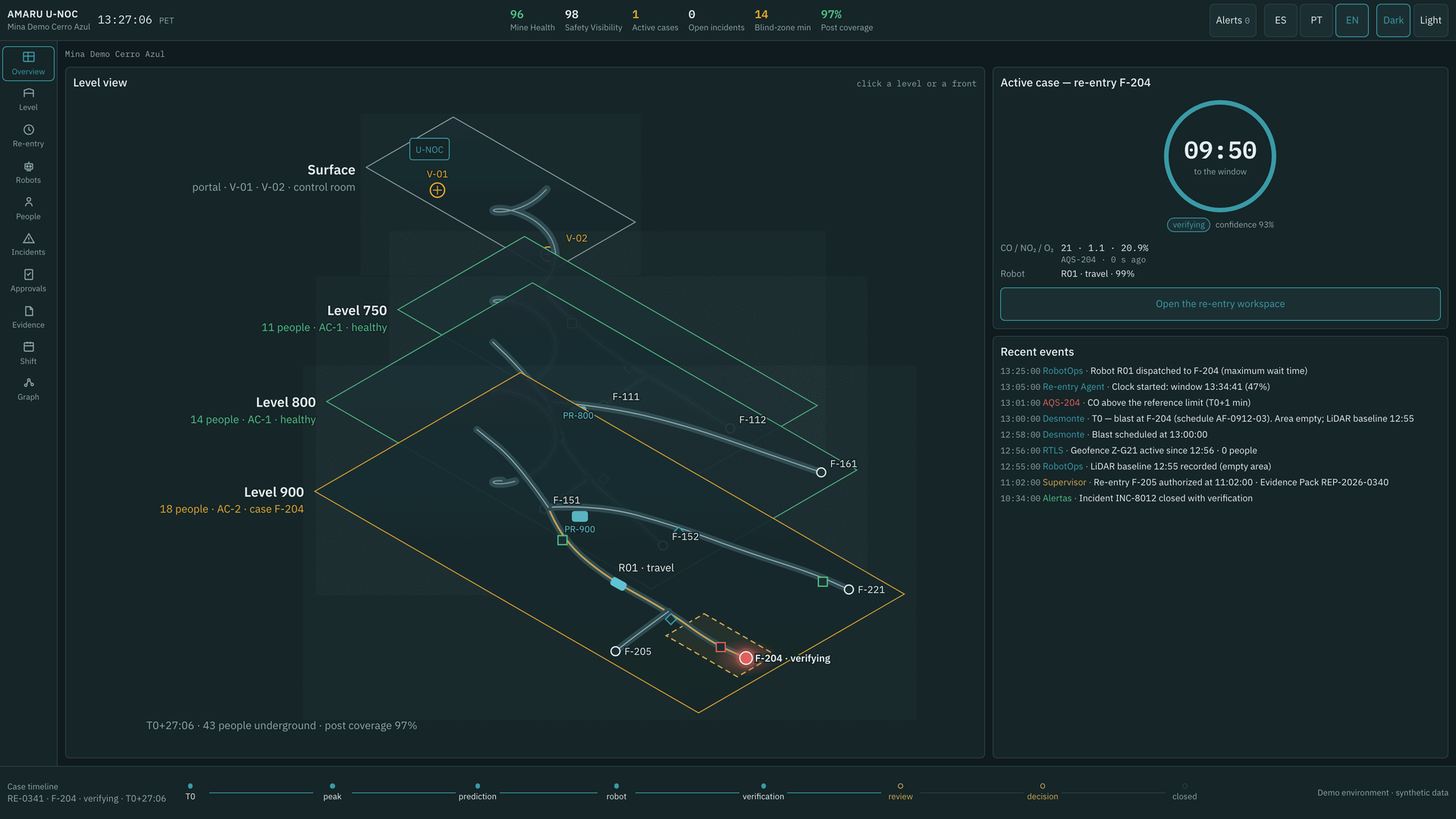
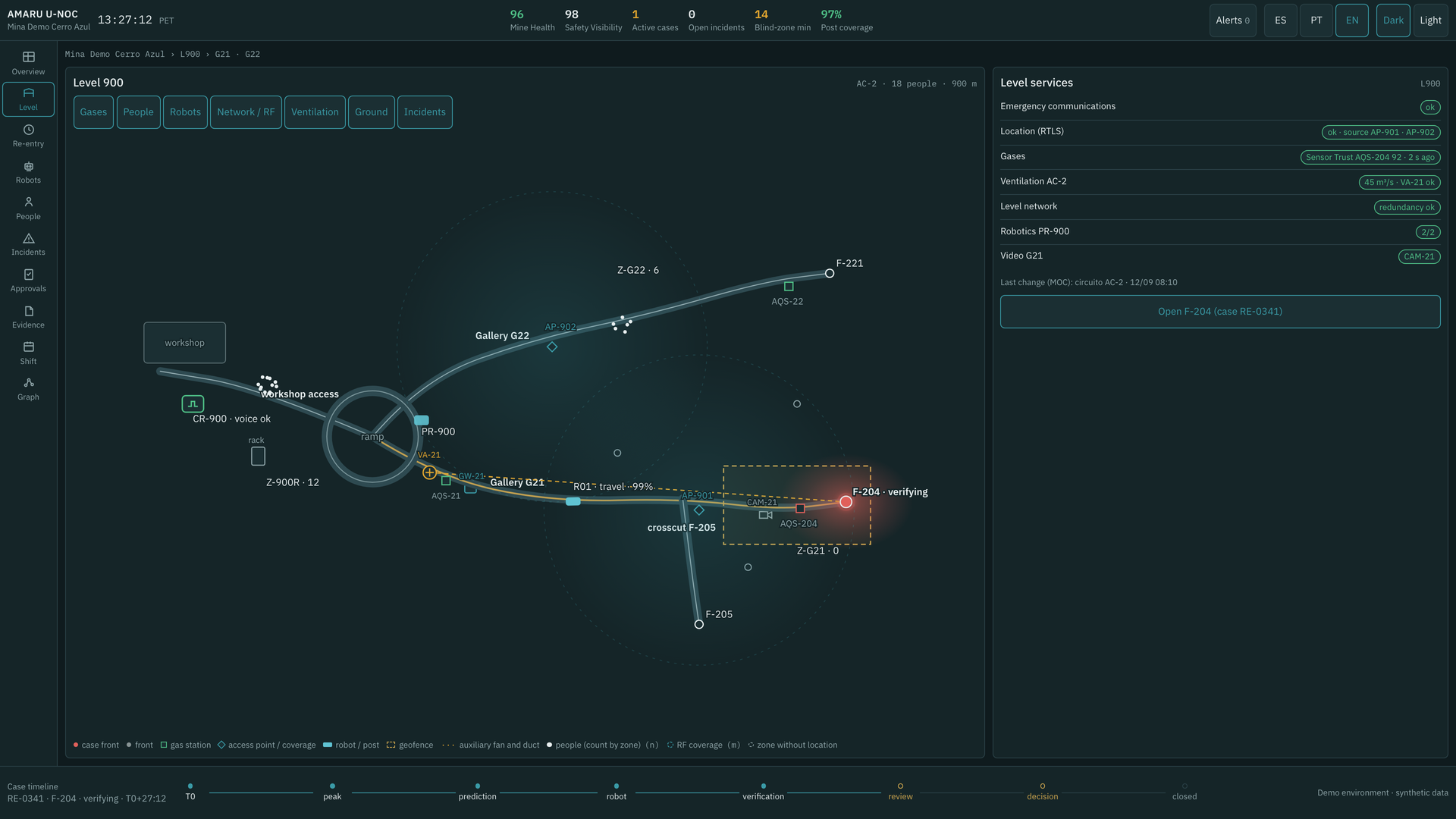
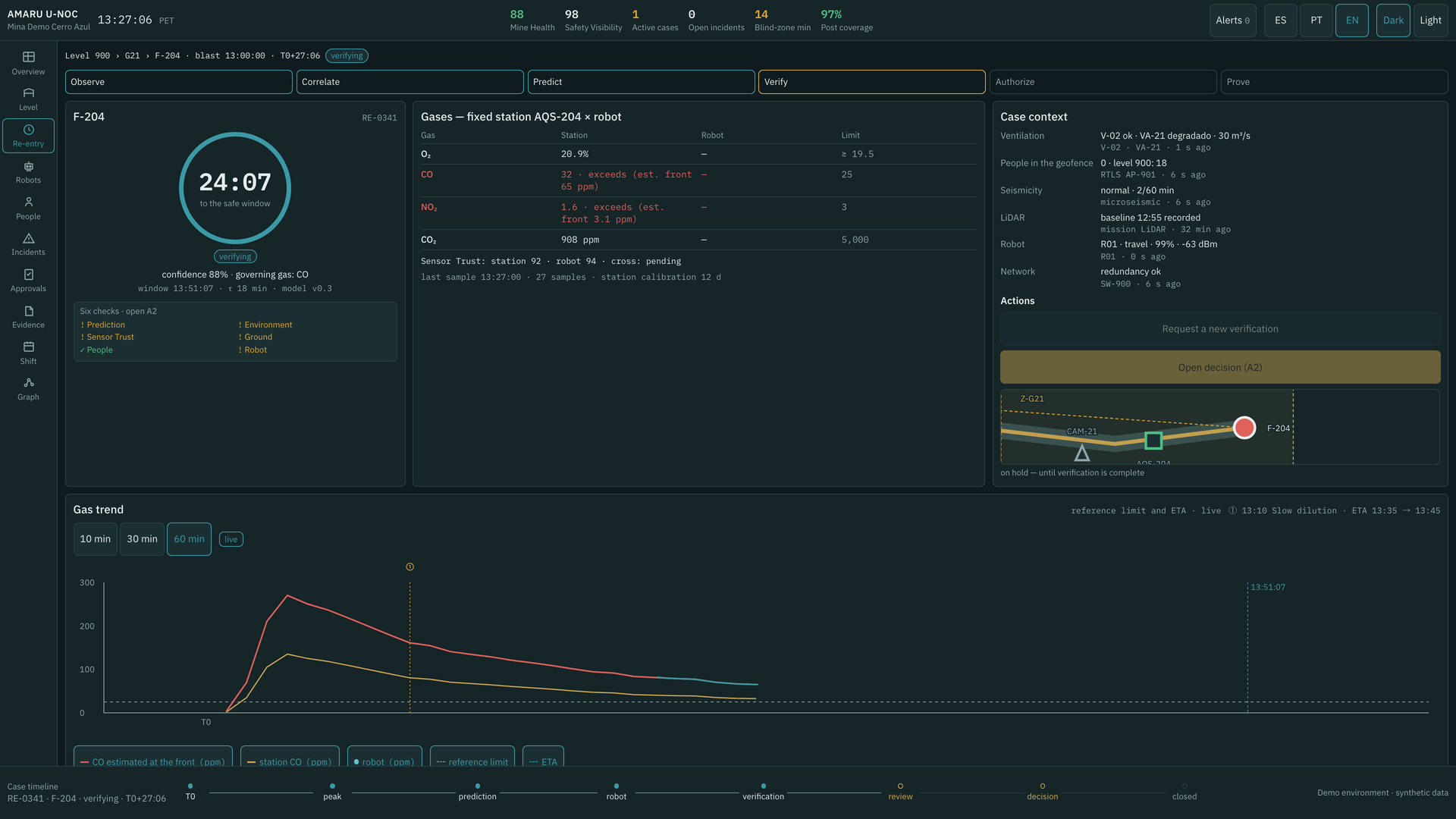
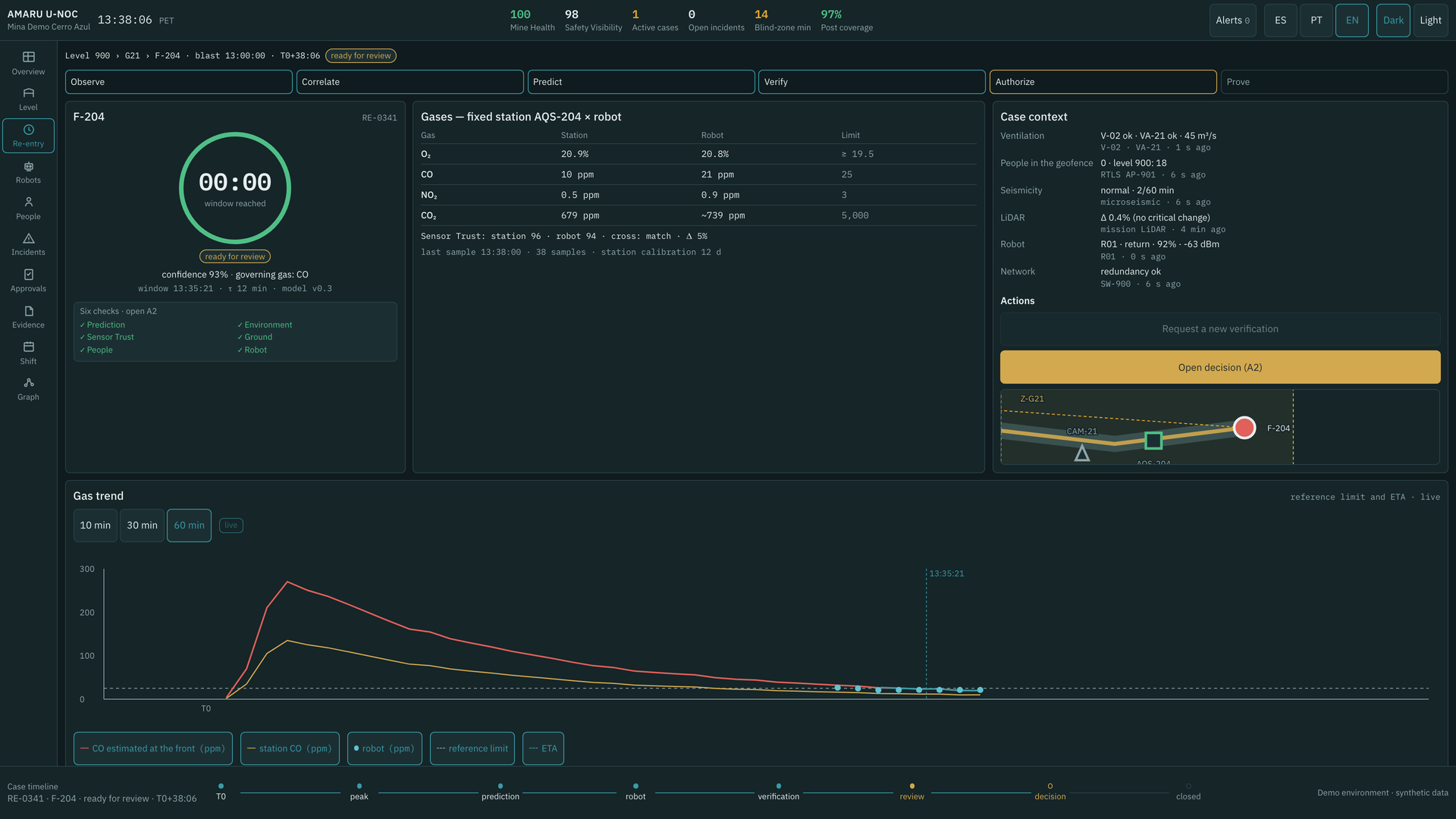
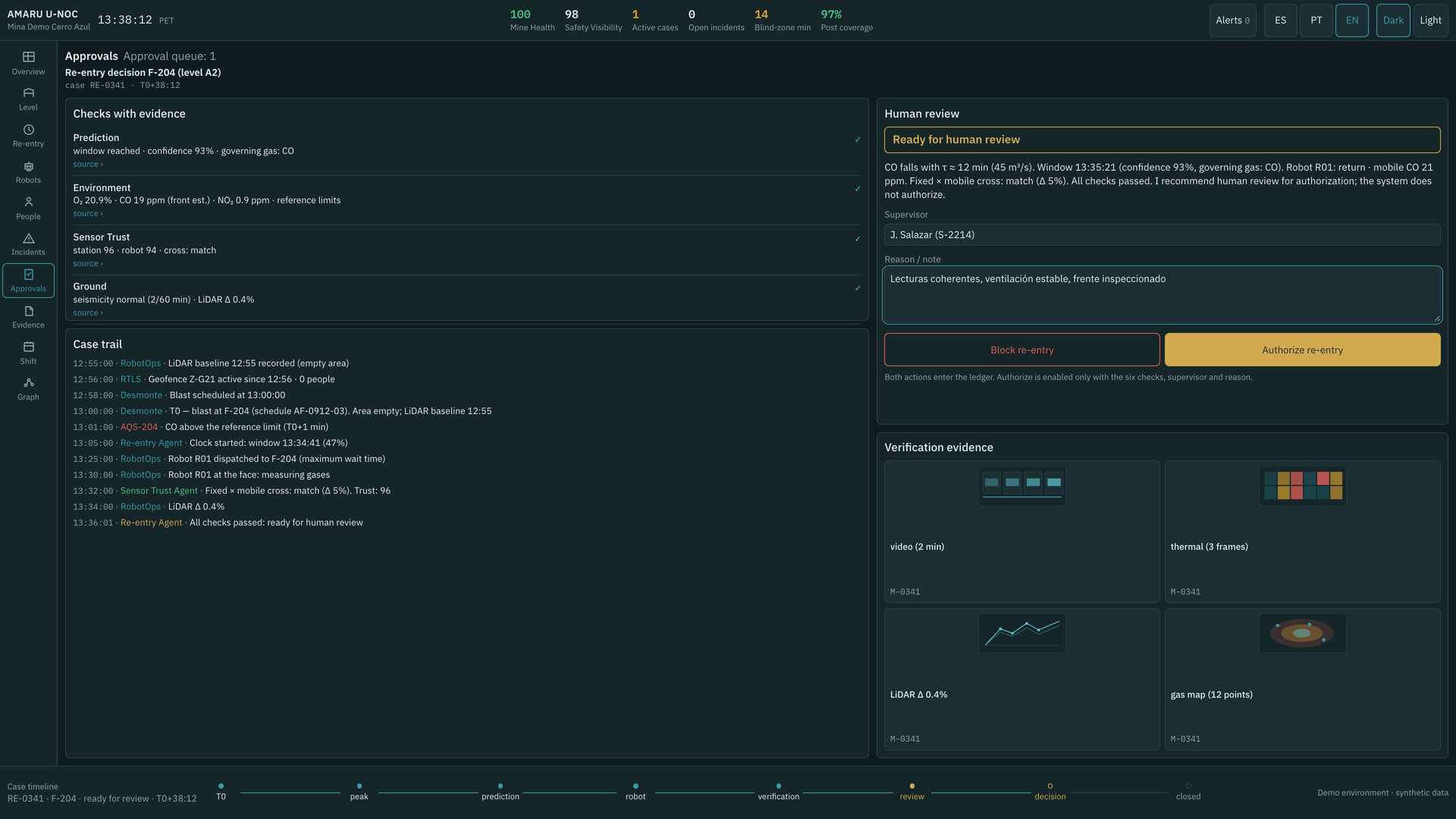
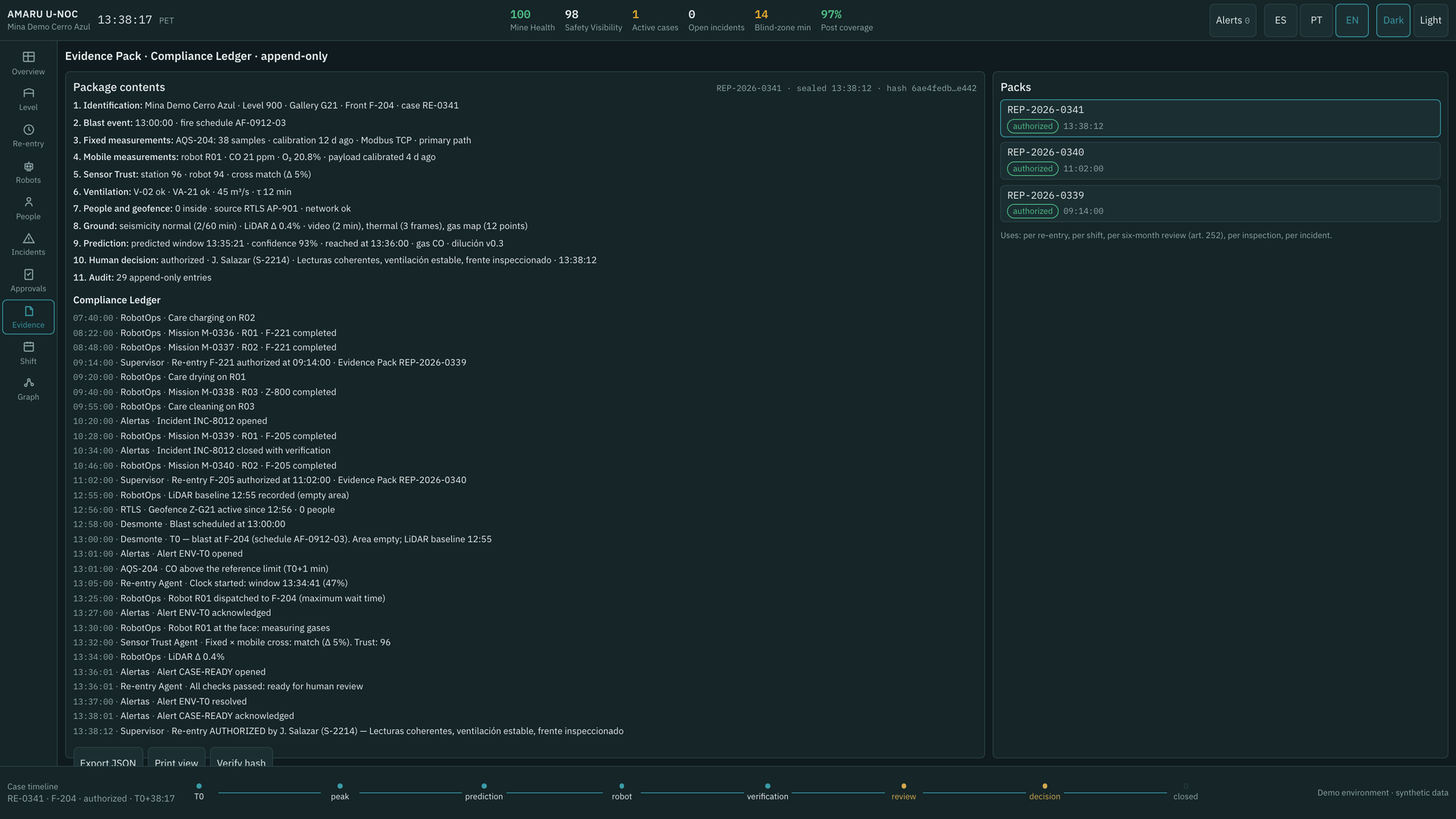
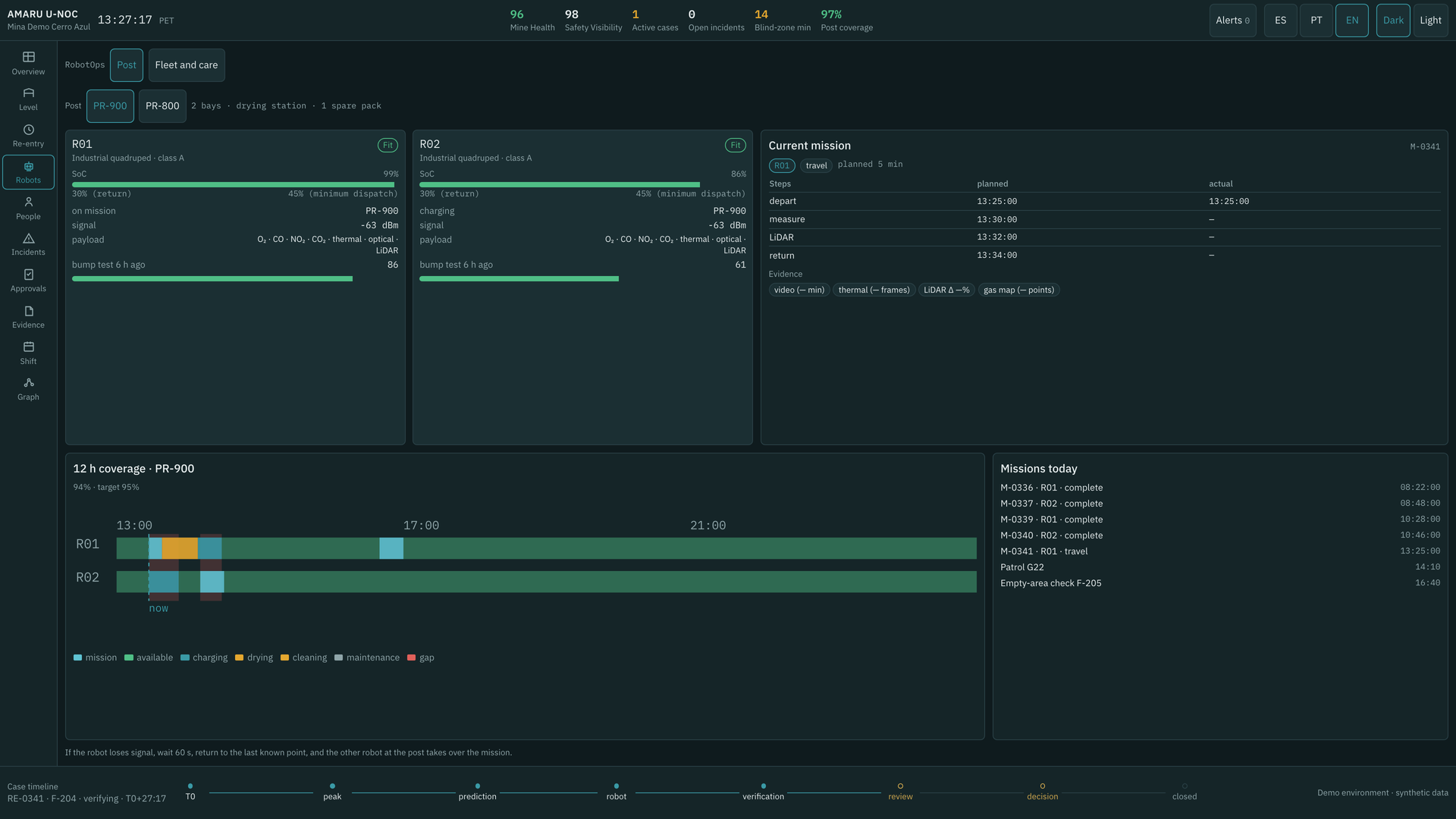
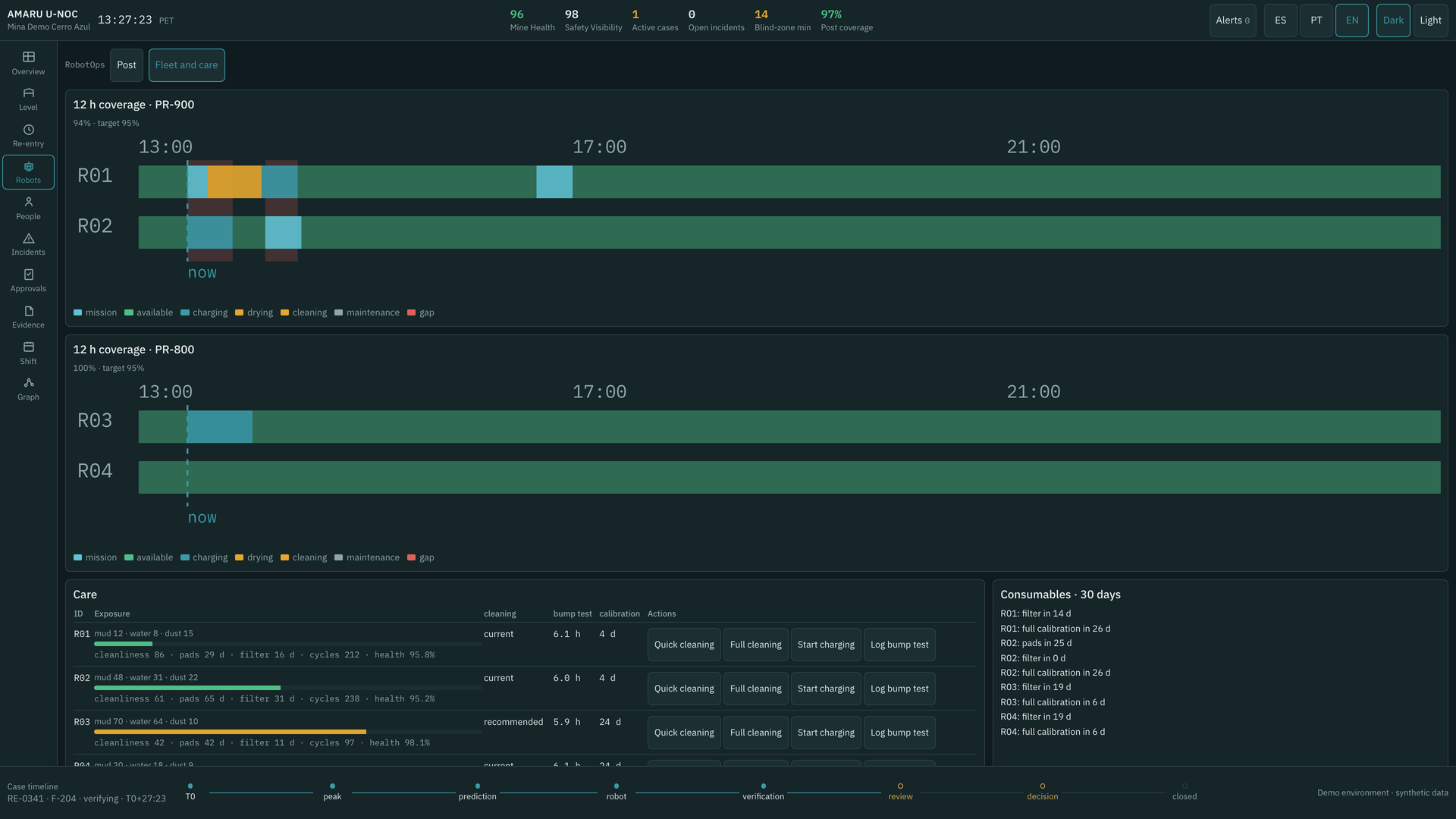
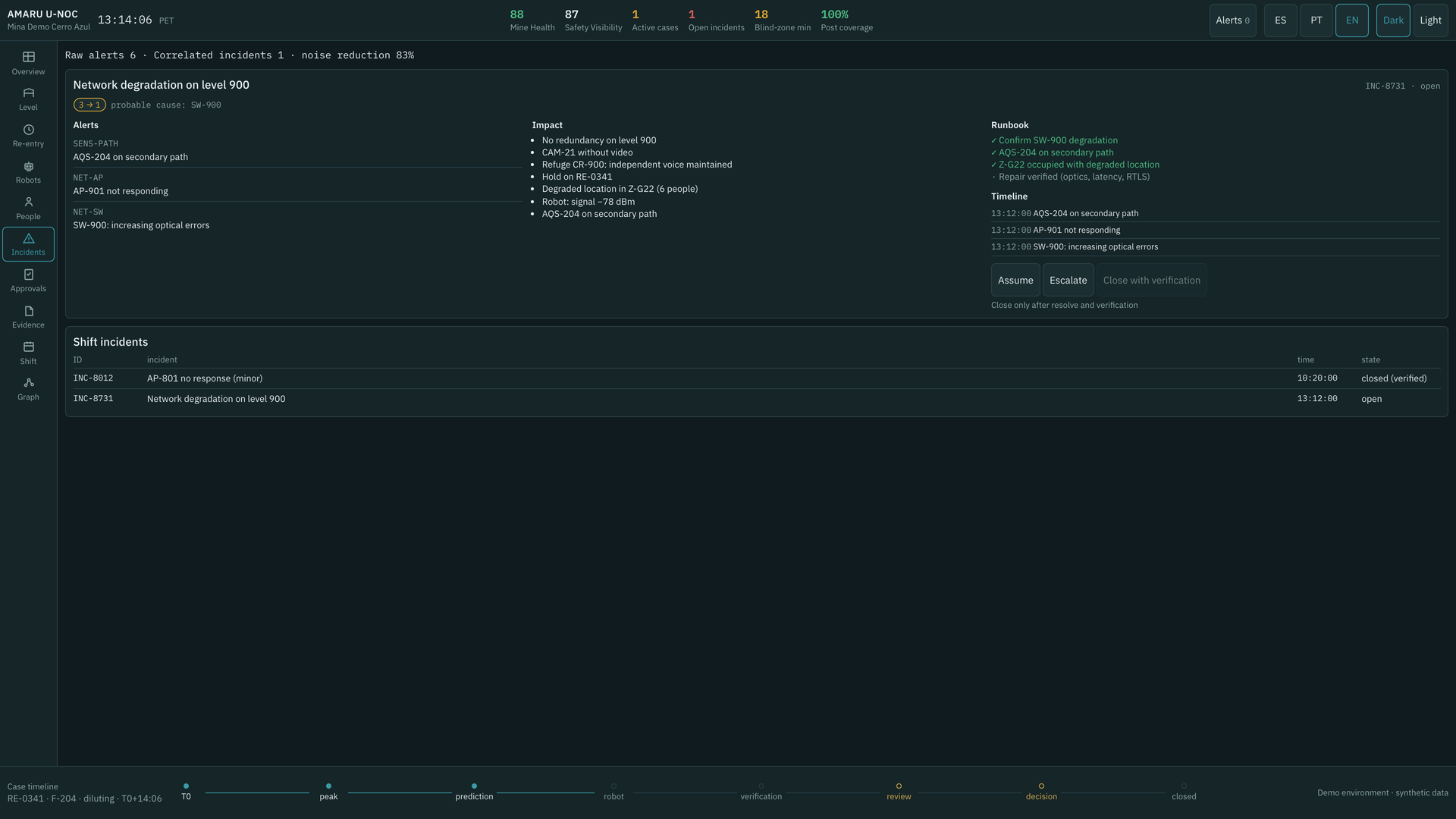
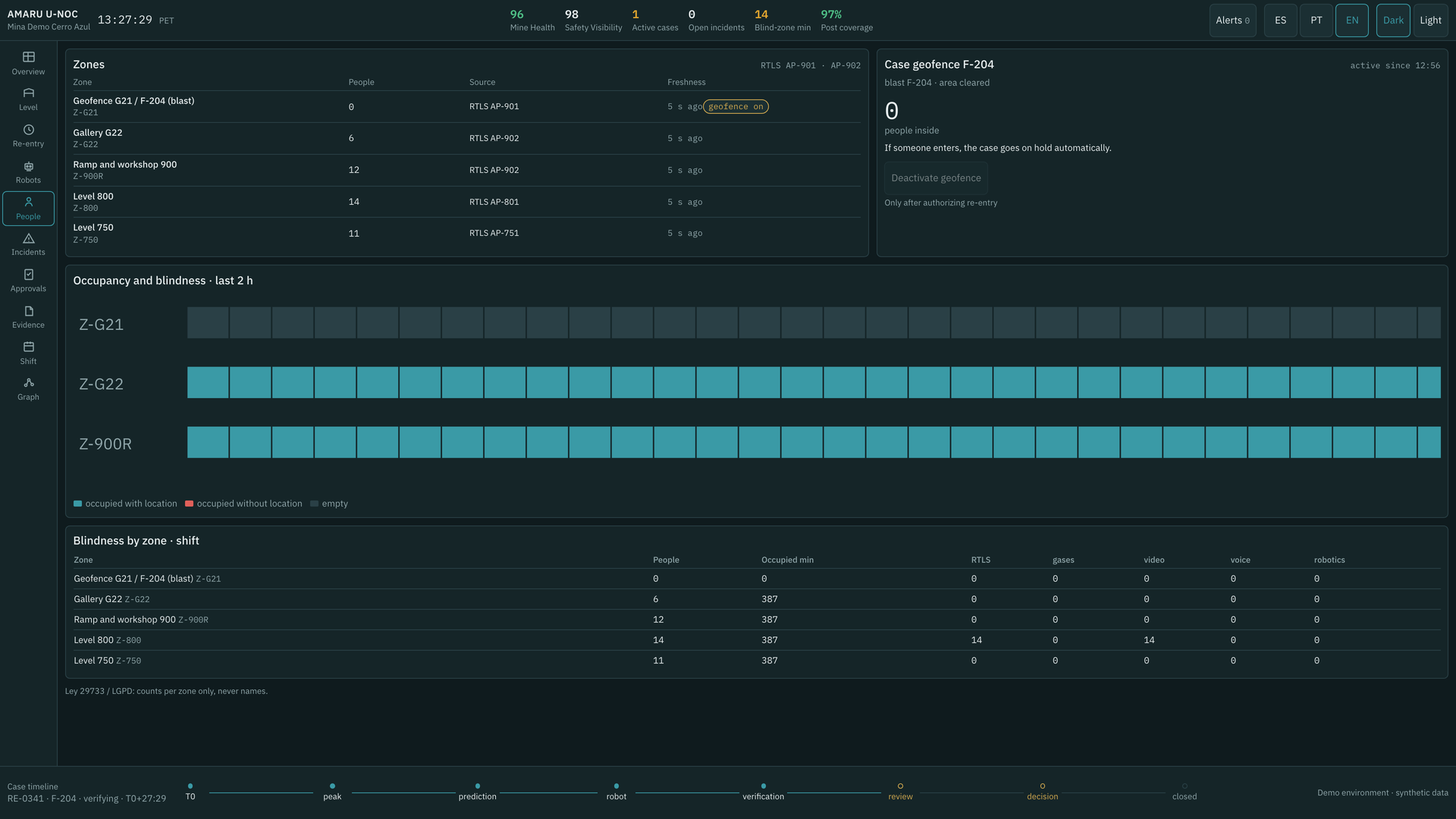
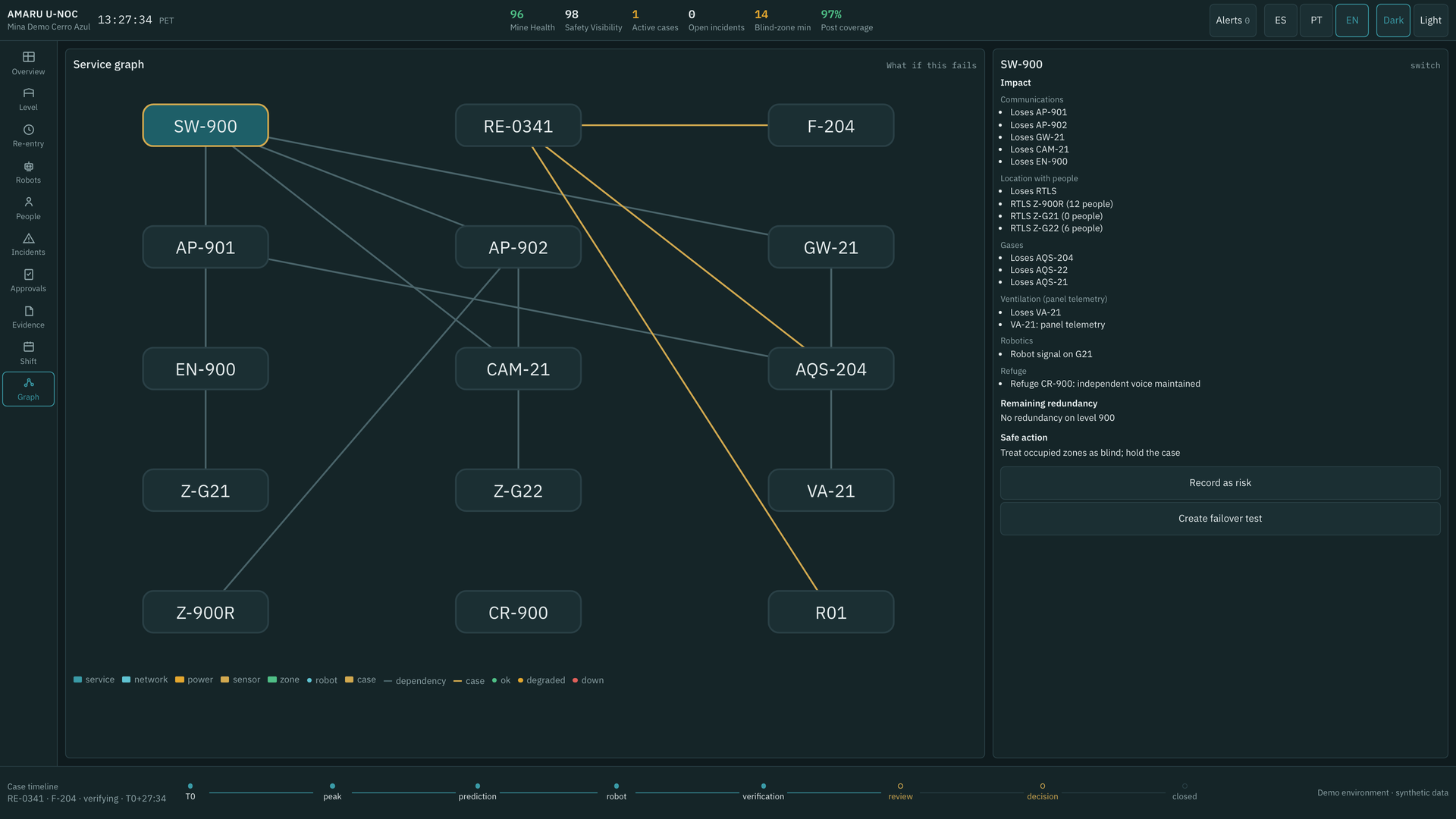
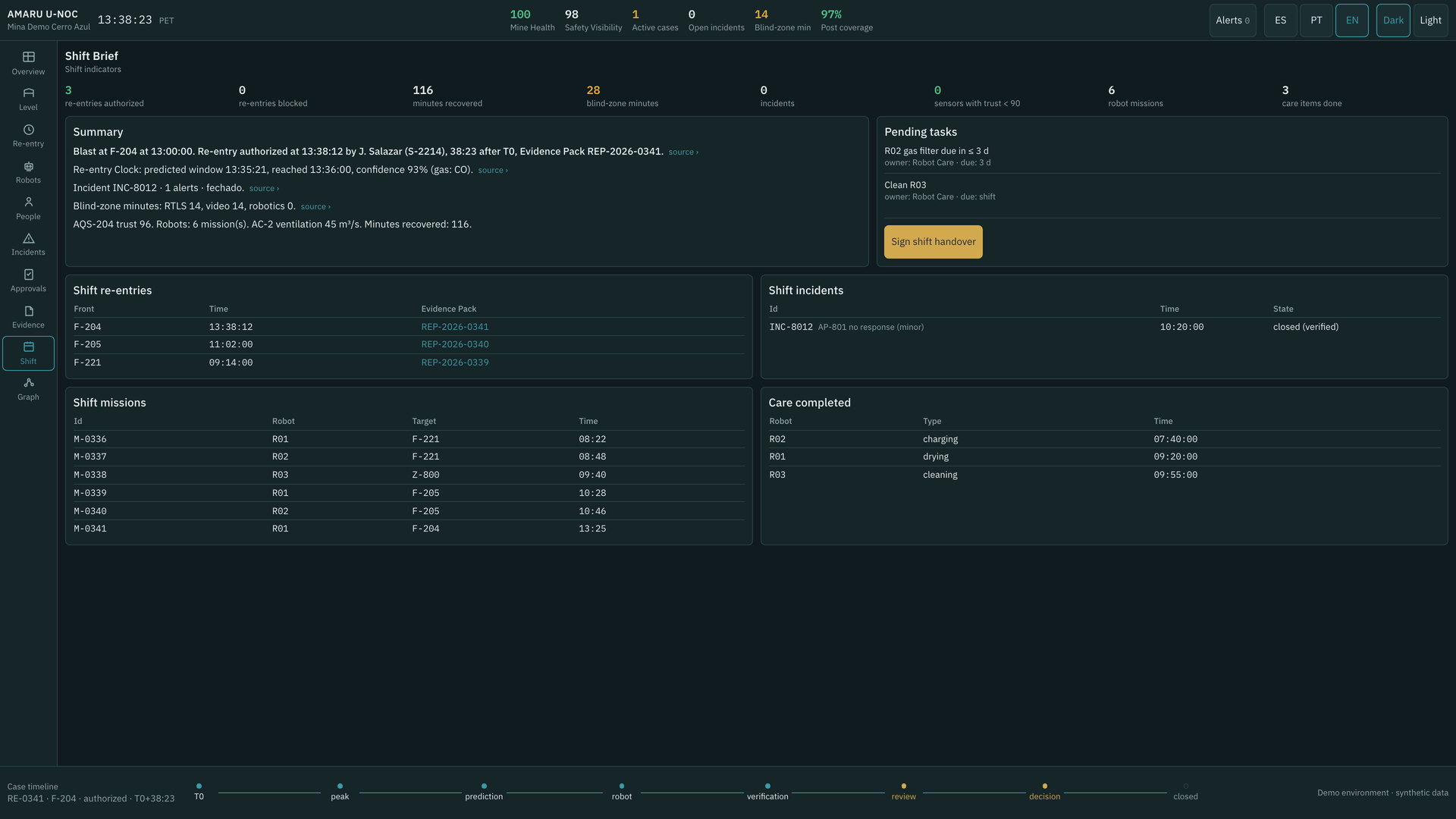
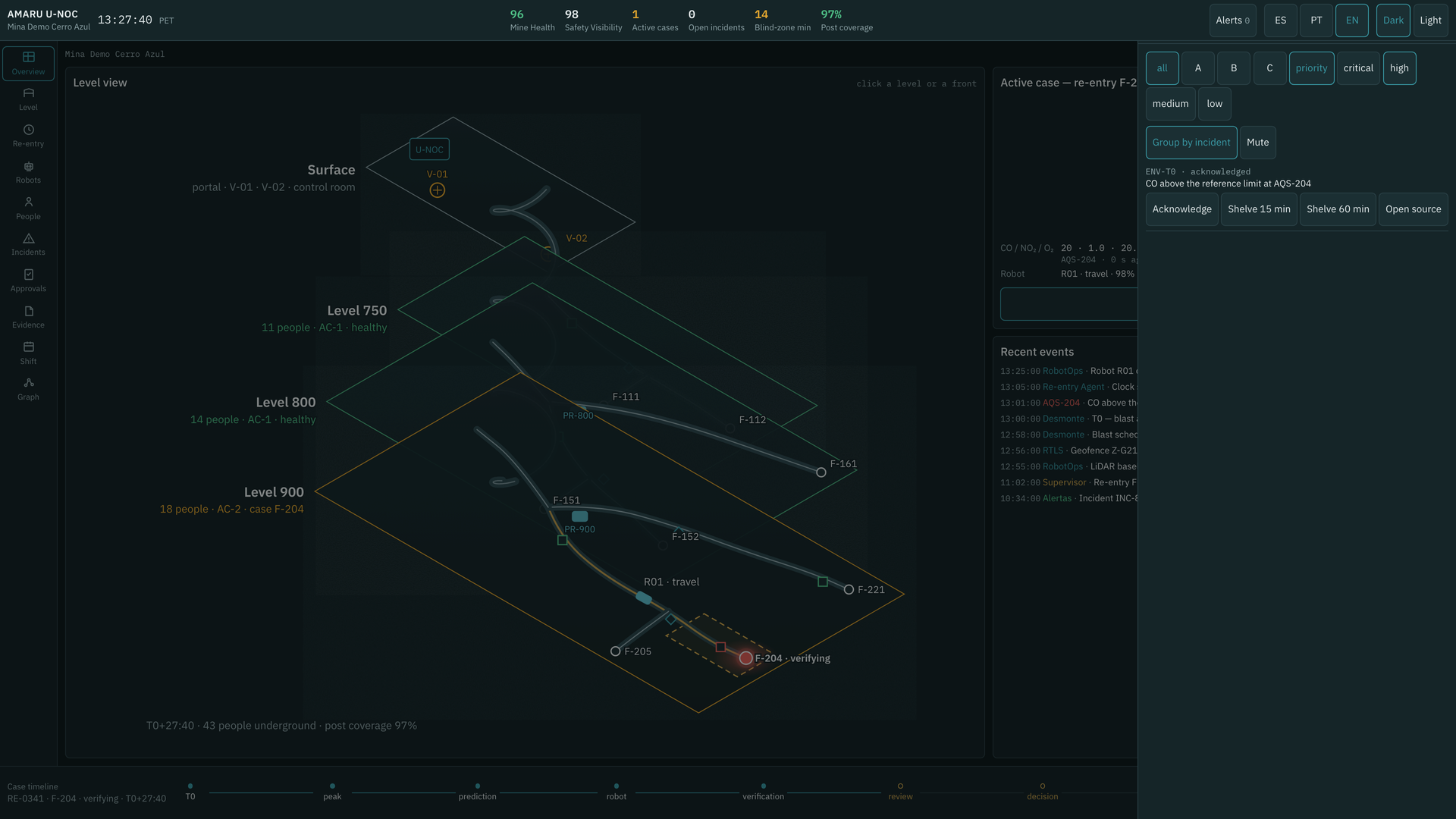
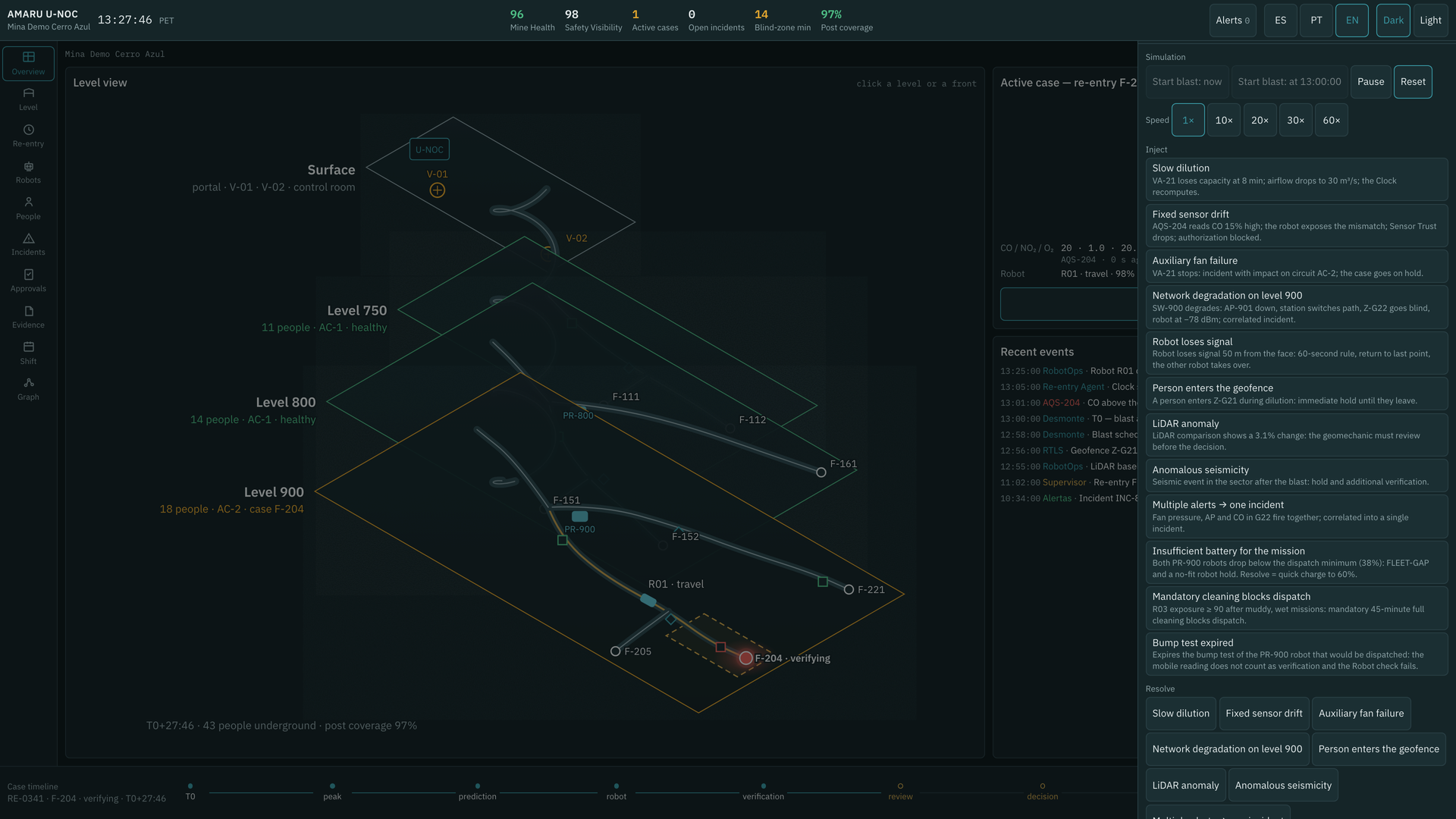
Mine overview — every level, every person count, the active case and its re-entry clock on one screen.
Screens from the demonstration environment; the product runs in Spanish, Portuguese and English, on desktop and on the supervisor's tablet — including offline. All data is synthetic.
The same decision, under different names
Blasting has a different name in every market — detonação in Brazil, voladura in Peru and Mexico, tronadura in Chile. Re-entry is the same decision: when a person may return to the face after the blast, with which gas readings, which ventilation and which record.
What governs the decision in each country
The rules are public. U-NOC does not interpret the rule: it records what was measured and who decided.
- Peru
- DS 024-2016-EM
- Chile
- DS 132 — Reglamento de Seguridad Minera
- Mexico
- NOM-023-STPS-2012
- Colombia
- Decree 1886 of 2015
- Brazil
- NR-22
Predicts
A physical gas-dilution model turns fixed-station and robot readings into a safe-window forecast — with its confidence and the governing gas — recalculated as new readings arrive.
Acts
Missions dispatched to the robots of each post, with battery, cleaning and calibration rules built in. If a robot loses signal, it returns to the last known point and the other robot takes the mission.
Proves
Every reading, action and decision goes to an append-only ledger. The Evidence Pack is sealed with a hash — ready for the re-entry record, the audit and the inspector.
People decide
The highest state the system reaches is “ready for human review”. Re-entry is authorized by a supervisor, with name and reason — never by the software.
Demonstration · synthetic data
The robot goes in first. The decision stays human.
One simulated shift in a fictional mine, from the portal to the shift report: eleven checkpoints, seven parameters per point, every alert acknowledged and every decision recorded with a name and a time.
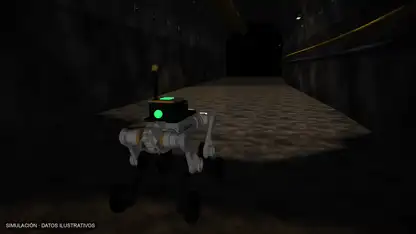
05:40. The shift has not gone in yet; the robot has. The mission was planned in the Control Centre and released by the supervisor; the robot self-checks and enters. A protocol, not a joystick.
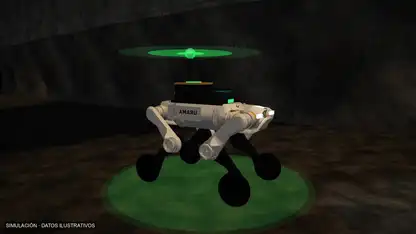
The robot stops, settles and measures for 30 to 60 seconds: seven readings in green, each with time, coordinates and a photo. An auditable record with nobody writing anything down; it reaches the dashboard as an informational event.
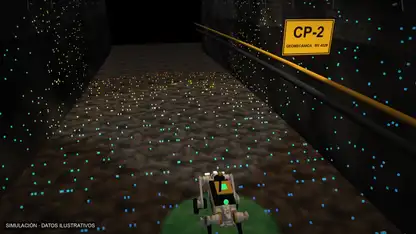
LiDAR sweep of roof, sidewalls and ground support, compared with the previous mission: a 3 mm difference, within the sensor's uncertainty. The human eye sees today's drift; the system sees the difference from yesterday's.
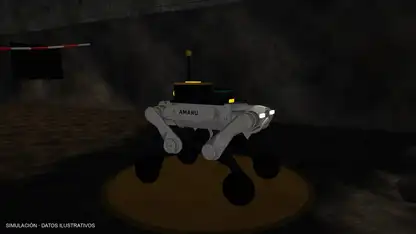
CO and NO₂ still above the re-entry threshold. The platform crosses the blast time with the ventilation flow and projects when the face will be ready for human review. Until then: do not release.
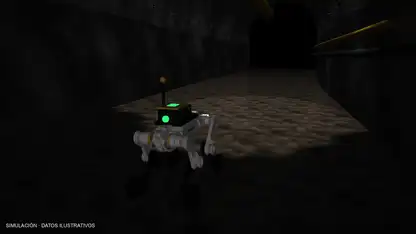
No coverage: the Control Centre loses telemetry. The robot keeps to the loaded mission inside the authorised zone, in local safe mode, stores readings and scans, and syncs them when the link returns.
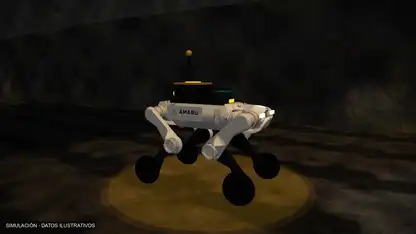
A sulphide zone with water: H₂S above the attention threshold and a WBGT reading that indicates heat stress. The platform asks for a second measurement, requests more ventilation and warns the supervisor with the exposure limit from their procedure.
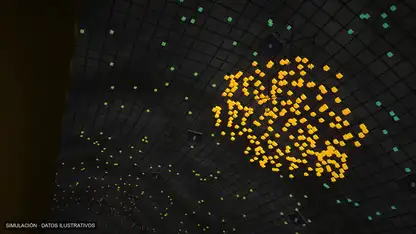
A new crack in the roof: the scan detects 18 mm of local deformation and the extensometer reads 6 mm in 24 hours. The platform asks for a higher-resolution scan and alerts the ground-control engineer. The sign shows up days before the event.
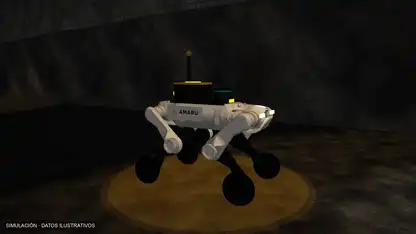
LEL rises to 12 %. The platform crosses it with CO and ventilation and recommends suspending hot work on that stretch; the supervisor issues the order with one click.
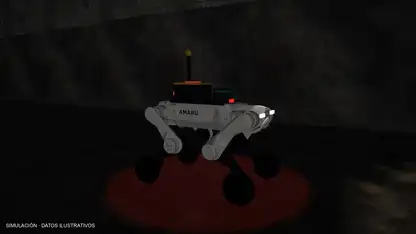
Oxygen below the minimum and CO₂ rising. The robot interrupts the route, withdraws to a safe position and transmits. The supervisor acknowledges and opens the face evacuation protocol; nobody was exposed.
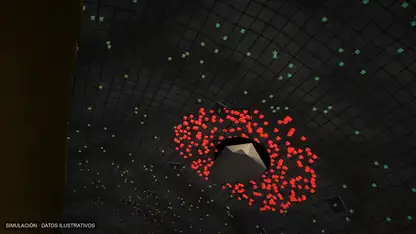
Three missions in a row show the deformation accelerating, and there is a loose block over the route. The robot stops before the zone and flags it as no-entry; the ground-control engineer decides on the closure and the alternative route.
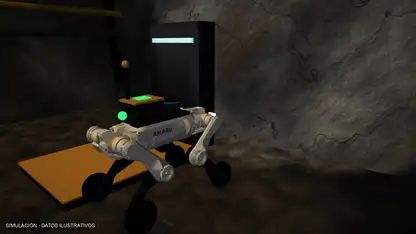
The robot returns to its charging station. Within two minutes the Control Centre has the shift report and the DS-024 inspection checklist filled in point by point, with every alert, its acknowledgement and who decided what.
Simulation with synthetic data in a fictional mine; illustrative thresholds, replaced by each operation's own procedure. The demo is narrated in Spanish.
The mission in 66 seconds
The full demo (4 min 25 s, in Spanish)
Evidence library
What the mission delivers on return
The four documents the demonstration generates and makes available for download: the shift report, the DS-024 inspection checklist filled in by the mission, the blank template and AMARU's obligations as a contractor. Samples with synthetic data from a fictional mine, in Spanish.
-
Shift report · RPT-4520-20261027-T1
Two pages: shift summary, checkpoints, ground conditions, events and acknowledgements. The same PDF that opens in the console.
-
DS-024 inspection checklist · filled in by the mission (CHK-4520-20261027-T1)
35 checks in 8 sections with the result computed from the mission, the evidence (point, time, reading, event) and the person responsible, with name and time.
-
DS-024 inspection checklist · template
The same 35 checks with the result columns left blank, ready for each operation's own procedure.
-
DS-024 checklist · AMARU's obligations as a contractor
32 checks, a RACI matrix, the mission sheet and the post-blast report.
Model documents labelled “pendiente de validación legal”: the articles of D.S. 024-2016-EM they cite are reviewed by Peruvian legal counsel before any delivery as an official document. Demo data, never client results.
Frequently asked questions
What is post-blast re-entry?
It is the clearance for people to return to a face after a blast, when gases, ventilation and ground conditions allow it. In U-NOC that window appears as a re-entry clock, computed from the readings of the fixed stations and the robots.
Which gases are monitored?
The ones the operation defines — typically CO, NO₂ and O₂ — with the limits of the country's rule and of the mine itself. The demo uses synthetic values.
Does the robot replace the supervisor?
No. The robot goes in before people and measures; the decision stays with the person who signs. U-NOC prepares the decision and keeps the evidence.
Does it work without network underground?
If a robot loses signal it returns to the last known point and another robot takes the mission; the supervisor's tablet works offline and syncs when there is network.
In which countries is U-NOC available?
Today in Peru and Brazil — the launch markets. Mexico, Chile and Colombia are on the expansion roadmap. The product runs in Spanish, Portuguese and English.
Is the data on the screens real?
No. Everything on this page comes from the demonstration environment: a fictitious mine and synthetic data.